
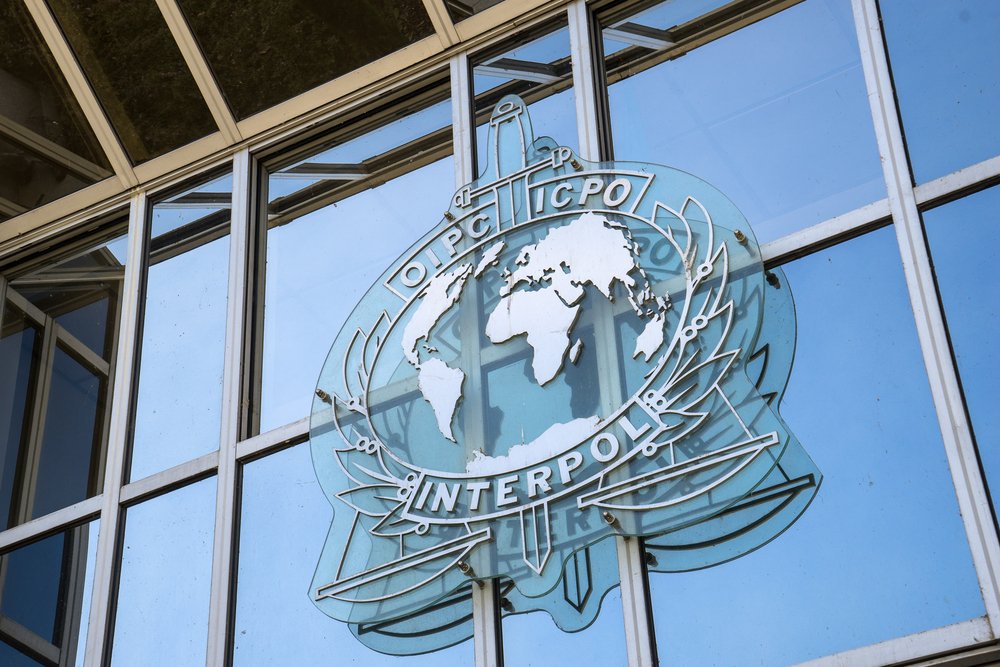
A potentially important case before the Tribunal judiciaire de Lyon may determine whether INTERPOL can be sued for damages by a person who claims to have suffered serious harm because of an abusive Red Notice.
The claimant, Ahmed Jaafar Mohamed Ali, is a Bahraini political opponent who was arrested in Serbia in November 2021 pursuant to a Red Notice requested by Bahrain. He was extradited to Bahrain in January 2022 and is now serving life sentences there.
Mr Ali alleges that INTERPOL should not have published the Red Notice because the Bahraini proceedings were politically motivated and because his return exposed him to a real risk of torture and other ill-treatment. He claims that INTERPOL’s conduct contributed directly to his arrest, extradition and subsequent imprisonment.
The preliminary issue is whether INTERPOL enjoys immunity from the jurisdiction of the French courts. A hearing took place in Lyon on 13 October 2026. According to the Bahrain Institute for Rights and Democracy, judgment on that issue is expected on 31 December 2026.
The background to the claim
According to those supporting his claim, Mr Ali participated in Bahrain’s 2011 protest movement and campaigned for the rights of the country’s Shia population. He was subsequently convicted in absentia of terrorism-related offences and sentenced to life imprisonment.
Bahrain relied on those convictions when seeking a Red Notice. Mr Ali was arrested in Belgrade on 3 November 2021 and detained while Bahrain sought his extradition.
A Red Notice is not an international arrest warrant. It is a request circulated through INTERPOL seeking a person’s location and provisional arrest for extradition or similar lawful action. National authorities decide whether to arrest the individual and whether extradition should follow.
During the Serbian proceedings, he maintained that the prosecutions were politically motivated and that his religious identity and political activities placed him at risk of persecution, torture and possibly death if he were returned to Bahrain.
The Serbian courts nevertheless found that the requirements for extradition were satisfied. Serbia ultimately extradited Mr Ali on 24 January 2022, notwithstanding an interim measure issued three days earlier by the European Court of Human Rights under Rule 39, directing Serbia not to remove him pending consideration of his case.
The European Court’s judgment against Serbia
In Ali v Serbia (Application no. 4662/22), decided on 25 March 2025, the European Court of Human Rights found that Serbia had violated Article 3 of the European Convention on Human Rights.
The Court concluded that the Serbian authorities had not adequately examined Mr Ali’s claim that extradition would expose him to a real risk of torture or other ill-treatment. It also found a violation of Article 34 because Serbia proceeded with the extradition despite the Court’s interim measure.
The judgment was directed against Serbia, not INTERPOL. It did not decide that the Red Notice itself was unlawful or that INTERPOL was responsible for the extradition. Its findings underline the importance of the human-rights concerns surrounding his return, but do not establish what INTERPOL knew—or should have known—when publishing or subsequently retaining the notice.
The claim against INTERPOL
According to the Bahrain Institute for Rights and Democracy, which is supporting him, Mr Ali alleges that INTERPOL committed a fault by publishing a Red Notice based on politically motivated convictions and without adequately addressing the relevant human-rights risks.
He seeks compensation for the distress caused by the notice and for the consequences of his arrest, extradition and detention. INTERPOL asserts immunity from legal proceedings in France. The preliminary issue of whether the French courts can exercise jurisdiction over INTERPOL has been set down for a hearing on the 31st December 2026. If Mr Ali prevails the Court will then have to consider if Mr Ali can establish that INTERPOL acted wrongfully and caused compensable loss.
INTERPOL’s claim to immunity
The publicly available account of the parties’ positions is limited. The Bahrain Institute for Rights and Democracy’s press release states that INTERPOL asserts immunity from legal proceedings but does not explain its detailed arguments. It reports Mr Ali’s contention that immunity should be set aside where an international organisation provides no effective alternative remedy, pointing particularly to the absence of a mechanism for compensating people harmed by Red Notices published in breach of INTERPOL’s rules.
The case therefore raises an important tension between organisational immunity and the right of access to a court under Article 6 of the European Convention on Human Rights.
Article 5 of INTERPOL’s headquarters agreement with France grants immunity from jurisdiction, subject to specified exceptions. Article 24(1) provides for arbitration of disputes with private parties, but a 2016 protocol excludes acts concerning data processing in INTERPOL’s Information System, including Red Notices, which may instead be challenged before the Commission for the Control of INTERPOL’s Files.
Mr Ali’s objection appears to be that the CCF can review the compliance of data and order its deletion but cannot award damages. However, European Court of Human Rights jurisprudence establishes that the absence of an alternative remedy does not, by itself, mean that recognising immunity breaches Article 6. The court must consider whether immunity would disproportionately restrict access to justice in the circumstances, taking account of the alternatives actually available.
The forthcoming ruling could therefore have significance well beyond this case. If Mr Ali overcomes the immunity defence, it could potentially open a route to compensation for other clients who can establish that INTERPOL wrongfully published or retained their Red Notice and that this caused them demonstrable harm. Success on immunity would not itself establish liability, but it could allow claims to be heard for damage that deletion alone cannot repair.
If you are concerned about an existing or potential INTERPOL Red Notice, please contact our London offices on 0203 858 0851 to discuss your case.

Roger J Sahota
Roger Sahota is a partner at Berkeley Square Solicitors, co-author of INTERPOL Law and Practice (Sweet & Maxwell), and founding editor of Red Notice Monitor.
He advises individuals on challenging Red Notices and diffusions, including making pre-emptive representations where a request is anticipated.