
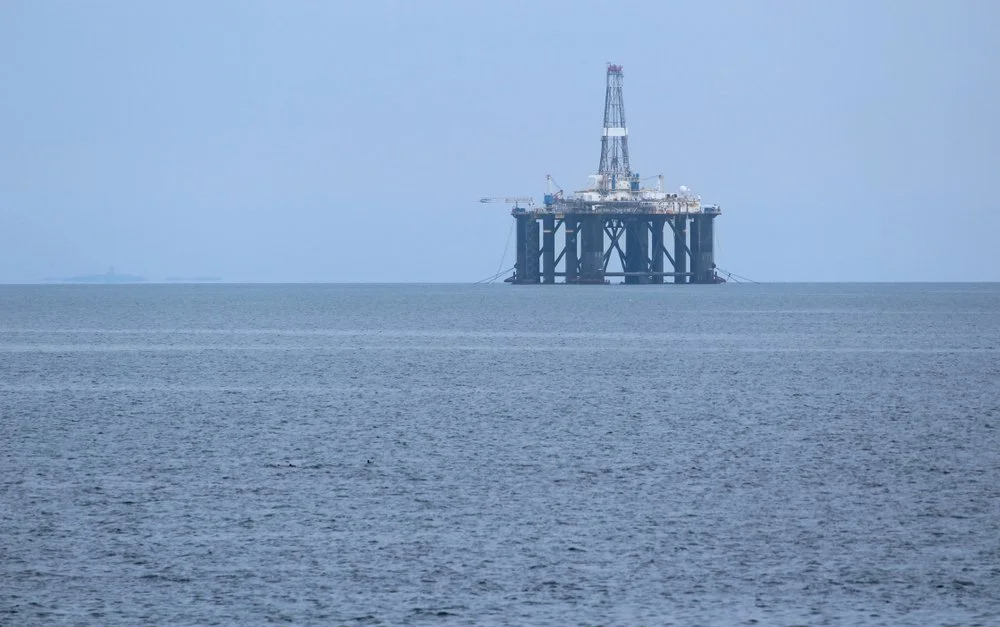
Oil Rig Offshore
By Roger Sahota, BSQ partner
On 13 October 2026, the Guardian reported that the United Kingdom had asked INTERPOL to reject Argentine Red Notice requests seeking the arrest of individuals connected with the Sea Lion offshore oil development in the Falkland Islands.
According to the report, the UK Government sent a letter to INTERPOL’s headquarters in Lyon arguing that any resulting Red Notice requests should be treated as politically motivated. The Government is reportedly concerned that Argentina is attempting to deter individuals and companies from participating in commercial activity in the Falkland Islands that is regarded as lawful by the United Kingdom and the Falkland Islands Government.
INTERPOL is understood to have responded that it would observe Article 3 of its Constitution. Article 3 strictly prohibits the organisation from undertaking any intervention or activity of a political, military, religious or racial character. If a request is found to be predominantly political, INTERPOL should refuse to authorise it. If the information has already been recorded, the relevant data may have to be blocked or deleted.
The UK’s intervention therefore presents an unusually clear example of one member country making pre-emptive representations to INTERPOL based on Article 3 of its Constitution.
It is not presently known whether INTERPOL has published any notices, refused the requests or placed them under continuing review. What is clear is that the threatened use of INTERPOL has become part of a much wider dispute between Argentina and the United Kingdom over sovereignty, natural resources and the economic future of the Falkland Islands.
The Sea Lion project
Sea Lion is a major offshore oil development in the North Falkland Basin, approximately 220 kilometres north of the islands. It is being developed principally by Navitas Petroleum and Rockhopper Exploration.
The project is economically significant. It has the potential to transform the Falkland Islands’ economy and has been strongly supported by the Falkland Islands Government and the United Kingdom.
Argentina, however, regards the islands—known there as Las Malvinas—and the surrounding maritime areas as Argentine territory. It consequently maintains that hydrocarbon exploration authorised by the Falkland Islands Government is unlawful unless it has Argentine approval.
On 7 September 2026, the Argentine Government announced that its Foreign Minister would bring a criminal complaint against Navitas Petroleum entities, JHI Associates and Eco (Atlantic) Oil & Gas. The announcement stated that the complaint would also extend to directors, managers, administrators, representatives and other individuals alleged to have participated in the activity.
Significantly, Argentina expressly described the proceedings as part of its policy of protecting its natural resources and asserting sovereignty over the Falkland Islands and the surrounding maritime areas.
An Argentine federal court has also granted an interim measure directing Rockhopper and Navitas to refrain from commencing or continuing work on the project. That ruling was made in environmental and sovereignty-related proceedings and was described as provisional rather than a final determination of liability.
Argentina instituted arbitral proceedings against the United Kingdom under Annex VII of the United Nations Convention on the Law of the Sea on 28 September 2026. On 13 October 2026, it applied to the International Tribunal for the Law of the Sea for provisional measures intended to prevent the project from proceeding. Taken together, these measures form part of a coordinated legal and political campaign rather than an isolated criminal investigation.
INTERPOL’s pre-publication review system
Incoming Red Notice requests are reviewed by INTERPOL’s Notices and Diffusions Task Force before publication. That review includes checking whether a request complies with Articles 2 and 3 of INTERPOL’s Constitution and with the Rules on the Processing of Data. Article 83 of the Rules on the Processing of Data generally excludes Red Notices arising from administrative regulations or private disputes, which may be relevant given the commercial and regulatory context.
Representations from another INTERPOL member country can be highly significant at this stage. They may provide information that does not appear in the requesting country’s account and reveal the wider diplomatic or political context behind what has been presented as an ordinary criminal prosecution.
This enables the NDTF to consider Articles 3 and 83 before a Red Notice is authorised and becomes visible to member countries, and before an individual is detained at a border or suffers other consequences.
The predominance test
INTERPOL will not decide whether the Falkland Islands are British or Argentine. Nor will it determine the validity of the competing maritime claims or decide whether the Sea Lion project is lawful under international law. Its task is narrower: to decide whether its police-cooperation systems can properly be used in connection with the dispute, consistently with its Constitution and Rules.
Argentina may present the requests as arising from domestic prosecutions for ordinary-law crimes, including the alleged unlawful exploitation of hydrocarbons, breaches of licensing legislation or environmental offences. Those labels are relevant, but they do not determine the Article 3 question.
Where a case contains both criminal and political elements, INTERPOL applies what is commonly called the predominance test. In straightforward terms, it asks whether the case, viewed as a whole, is mainly an ordinary criminal matter or mainly political.
The political context and Interpol’s neutrality
It is difficult to escape the conclusion that this case has a substantial political context. Argentina’s own official statements link the proceedings to the defence of its sovereignty over the Falkland Islands and their natural resources. The proceedings target people participating in an industry licensed by the Falkland Islands authorities and regarded as lawful by the United Kingdom.
That does not, by itself, determine the outcome under Article 3. INTERPOL must examine all the relevant circumstances and decide whether the requests are predominantly political or predominantly concerned with ordinary criminal conduct.
A critical consideration will be the implications for INTERPOL’s neutrality. Article 3 is intended to prevent the organisation from becoming involved in political disputes or appearing to adopt one member country’s position against another. INTERPOL’s Repository of Practice identifies protecting the organisation’s neutrality as one of Article 3’s principal objectives.
INTERPOL is not an international court and cannot decide whether the Falkland Islands are British or Argentine. Authorising Red Notices should not have the practical effect of giving one member country’s territorial position an international law-enforcement advantage. The risk of drawing INTERPOL into a bilateral dispute may therefore weigh heavily in its assessment.
Even if INTERPOL concludes that the political elements are insufficient, by themselves, to satisfy the Article 3 predominance test, they may still form part of a wider set of concerns about the requests. The political, commercial and regulatory features of the case may therefore be relevant both individually and cumulatively when INTERPOL decides whether its systems should be used.
A test of INTERPOL’s preventive safeguards
The Sea Lion controversy provides a rare public illustration of Article 3 being invoked before the consequences of a Red Notice have fully materialised.
From a practitioner’s perspective, any information that eventually becomes available about INTERPOL’s treatment of the requests would be extremely valuable. There is very limited published guidance explaining how pre-publication representations are received and considered. The NDTF’s case-specific reasoning is not ordinarily published. Although the CCF publishes selected anonymised decisions, those decisions provide only limited assistance in understanding how representations made directly to the General Secretariat at the screening stage are handled.
The UK’s intervention also appears to be a state-to-organisation representation rather than an individual application to the CCF. Any public information about its treatment would therefore provide unusual insight into how the General Secretariat responds when one member country objects in advance to requests made by another.It may also demonstrate what weight is given to representations about political context, commercial or regulatory disputes and the risk to INTERPOL’s neutrality.
If the requests are refused, the case may demonstrate the practical value of pre-publication scrutiny and timely representations by affected states and individuals.
If notices are published despite their connection with the Falklands sovereignty dispute, the case will raise more difficult questions about how INTERPOL applies the predominance test, Article 83 and its constitutional commitment to political neutrality.
Either way, the case could provide an unusually important test of INTERPOL’s preventive safeguards—and of whether intervention before publication can avoid the need to repair the damage caused by a non-compliant Red Notice afterwards.
If you are concerned about an existing or potential INTERPOL Red Notice, please contact our London offices on 0203 858 0851 to discuss your case.

Roger Sahota Partner, BSQ
Roger Sahota is a partner at Berkeley Square Solicitors, co-author of INTERPOL Law and Practice (Sweet & Maxwell), and editor of Red Notice Monitor.
He advises individuals on challenging Red Notices and diffusions, including making pre-emptive representations where a request is anticipated.